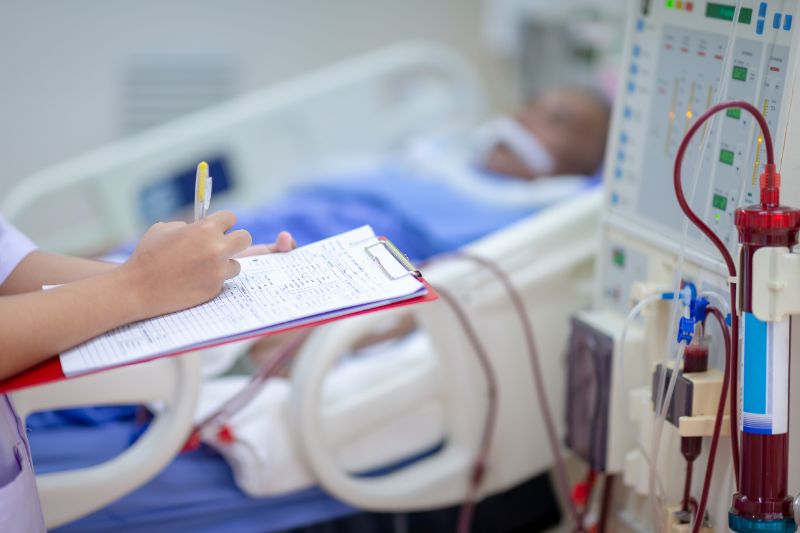
Nephrology & dialysis are closely connected areas that revolve around the care and management of kidney disease. Dialysis is a life-sustaining treatment that helps patients with kidney disease or kidney failure remove waste products and excess fluid from their bloodstream. On the other hand, nephrology is the medical specialty dedicated to the diagnosis, treatment, and prevention of kidney diseases.
Together, dialysis and nephrology play a vital role in ensuring the optimal functioning of the kidneys and improving the quality of life for patients with kidney-related conditions.
At Grand Forks Clinic, our experienced team of nephrologists and dialysis specialists work together to offer personalized treatment options and support for patients with kidney diseases.
What is Dialysis?
When you have kidney failure or kidney disease, they are not able to act as filters for your body to remove waste from the blood and get rid of it via your urine. If your kidneys are not working properly, waste can build up in your blood.
Dialysis is the process that replicates the essential functions of the kidneys, removing waste products and excess fluid from the blood. During dialysis, specialized equipment and medical techniques are used to help maintain the body's overall balance of fluids and electrolytes.
This critical therapy plays a crucial role in supporting the health and well-being of those whose kidneys are unable to perform these vital functions.
What is Nephrology?
Nephrology is a medical specialty dedicated to the prevention, diagnosis, and treatment of kidney diseases. Nephrologists are highly trained physicians who possess extensive knowledge of the complex functions of the kidneys and their impact on overall health.
Nephrologists specialize in the management of conditions such as chronic kidney disease, kidney stones, glomerulonephritis, polycystic kidney disease, and other disorders affecting the kidneys.
Nephrology services at Grand Forks Clinic encompass a wide range of diagnostic, treatment, and management options, including:
Evaluation and Diagnosis
Chronic Kidney Disease Management
High Blood Pressure Management
Dialysis Care
Primary Use of Dialysis
Dialysis is employed in two key situations:
Acute Kidney Injury (AKI)
This refers to a sudden episode of kidney failure or damage that occurs within a short period. AKI is typically managed through intravenous fluids. In severe cases, dialysis may become necessary temporarily until the kidneys recover.
Kidney Failure
When your kidney function declines to 10-15%, as measured by an estimated glomerular filtration rate (eGFR) of less than 15 mL/min, it is considered kidney failure or end-stage kidney disease (ESKD). At this stage, your kidneys require additional support for your survival.
Dialysis assumes some of the responsibilities of healthy kidneys, although it is not a cure for kidney disease. If you have ESKD, you will need dialysis either for life or until a kidney transplant becomes an option.
How Dialysis Works
Dialysis performs essential functions that your kidneys typically carry out to maintain bodily balance, including:
Removing waste and excess fluids from your body to prevent their buildup.
Regulating the levels of vital minerals, such as potassium, sodium, calcium, and bicarbonate, in your blood.
Assisting in the regulation of blood pressure.
Although dialysis clears waste products and extra fluid from your bloodstream, it does not fully replace all kidney functions. Therefore, dialysis is an ongoing treatment rather than a cure for kidney disease or kidney failure.
Types of Dialysis
Dialysis may be performed in two ways: Hemodialysis and Peritoneal dialysis.
Hemodialysis
In hemodialysis, an external filtering machine called the dialyzer is used to remove waste and extra fluid from your blood. The blood flows out of your body through a needle in your arm and passes through the dialyzer, where it’s cleansed. The filtered blood is then passed back to your body through another needle in your arm.
The whole process may take three to five hours and may be carried out a few times each week. Hemodialysis is usually carried out in the hospital.
Peritoneal Dialysis
Peritoneal dialysis uses the lining of the abdomen, called the peritoneum, to filter waste and excess fluids from the blood. For this, a special dialysis fluid is introduced into the abdomen through a catheter, and the peritoneum acts as a natural filter, allowing waste products and fluids to pass into the dialysis fluid.
The fluid is allowed to work in the body for a prescribed amount of time (60-90 minutes) and then drained out of the body. This process may need to be repeated up to four times daily and may be carried out at home.
While both types of dialysis can be effective, the choice of treatment depends on your medical condition. At Grand Forks Clinic, you will have the opportunity to discuss your options with our founder and primary nephrologist, Dr. Khaled Rabadi, to help determine the most suitable dialysis approach for you.
Benefits and Side-Effects of Dialysis
To maximize the benefits of your dialysis treatments, ensure that you:
Follow your prescribed treatment schedule diligently.
Follow a customized eating plan recommended by your kidney dietitian.
Engage in physical activities to enhance your strength and cardiovascular health.
Consult your doctor before taking any new medications, supplements, or herbal products.
Communicate concerns or side effects with your dialysis team for timely assistance and guidance.
Here are some commonly reported side effects associated with both types of dialysis:
Infection of the skin, blood, or the peritoneum. This should be treated promptly to avoid sepsis.
Fatigue, or feeling tired, is a common complaint for patients receiving treatment for an extended period.
Patients with kidney disease, including those on dialysis, may experience itchy skin, especially in advanced stages.
Side effects related to Hemodialysis include:
Sometimes, the entrance point used for hemodialysis, such as a fistula or graft, may experience blockage or complications. Immediate medical attention is necessary in such cases.
Muscle cramps may occur during or after hemodialysis sessions and can be managed with proper hydration and adjustment of electrolyte levels.
A drop in blood pressure during dialysis can lead to symptoms like weakness, dizziness, or nausea.
In rare cases, hemodialysis can result in blood loss.
Side effects related to Peritoneal Dialysis include:
Hernia due to the use of a catheter in the abdomen.
Gradual weight gain due to the absorption of the dialysis solution.
Dialysis & Nephrology Services at Grand Forks Clinic
At Grand Forks Clinic, we prioritize compassionate and patient-centered care. We understand that dealing with kidney disease and undergoing dialysis treatment can be challenging, both physically and emotionally.
To learn more about dialysis and how it can improve your kidney health, please don't hesitate to schedule a consultation with our experienced nephrologists. Call us at (701) 775-5800 or request an appointment online.
This website uses cookies so that we can provide you with the best user experience possible. Cookie information is stored in your browser and performs functions such as recognising you when you return to our website and helping our team to understand which sections of the website you find most interesting and useful.
Strictly Necessary Cookies
Strictly Necessary Cookie should be enabled at all times so that we can save your preferences for cookie settings.
If you disable this cookie, we will not be able to save your preferences. This means that every time you visit this website you will need to enable or disable cookies again.